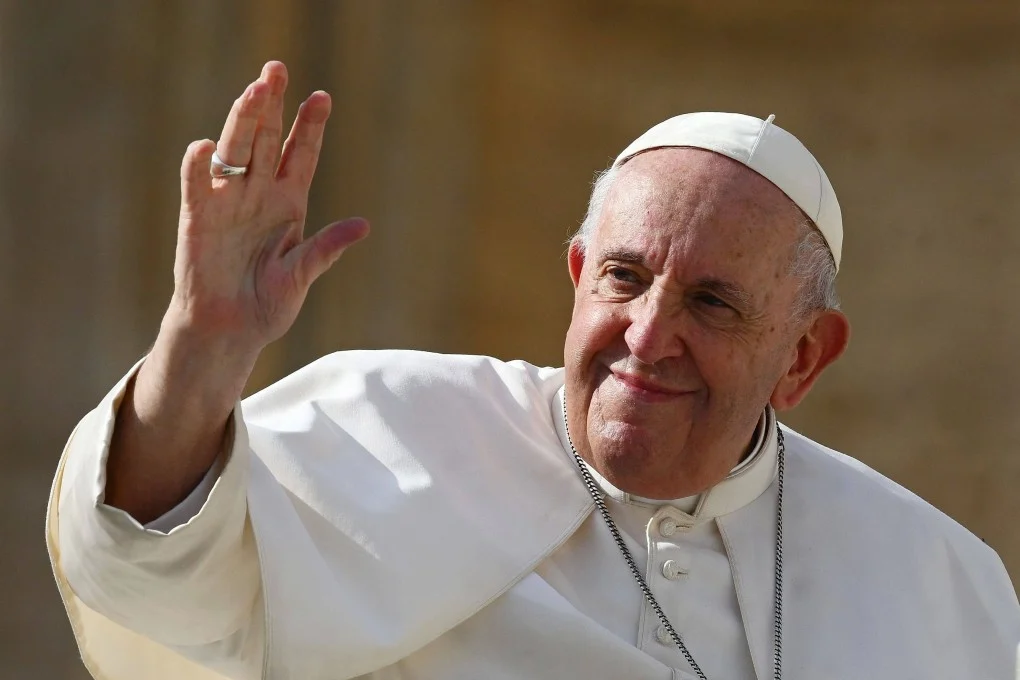
The world is mourning the death of Pope Francis, the first Latin American leader of the Roman Catholic Church, who passed away early Monday morning at the age of 88. According to Vatican officials, he suffered a stroke and cardiac arrest, following a recent hospitalization for double pneumonia.
Born Jorge Mario Bergoglio in Buenos Aires, Argentina, Pope Francis reshaped the papacy into a global force for empathy, social justice, and moral accountability. His death marks the end of one of the most dynamic, reform-minded papacies in modern history—and signals a turning point for the Catholic Church’s future.
A Sudden Loss After Signs of Strength
Francis’ passing came just weeks after his public appearance on Easter Sunday, where he smiled and waved to crowds in St. Peter’s Square, defying the physical strain of his recent illness. Many believed he was on the road to recovery following a 38-day hospital stay, making Monday’s news all the more shocking.
“With deep sorrow, I share the news of our Holy Father Francis’ passing,” announced Cardinal Kevin Farrell in a solemn Vatican broadcast.
Medical reports confirm that the pope had fallen into a coma prior to his death. He was also managing ongoing health issues, including Type 2 diabetes and high blood pressure, conditions that compounded his vulnerability after recent bouts of illness.
Funeral Preparations and Global Mourning
The Vatican has announced that Pope Francis’ body will be moved to St. Peter’s Basilica by mid-week to allow the faithful to pay their respects. While an official funeral date has yet to be released, it is expected to occur later this week in accordance with Church protocol.
National leaders across continents have declared periods of mourning. In South America, Argentina and Brazil lowered flags and held public vigils in honor of the region’s first pope. In the United States, President Maria Delgado issued a statement calling Francis “a moral voice in an age of division.” Leaders from Russia, Ukraine, Germany, and Kenya also expressed condolences.
Original Analysis: A Papacy Defined by People, Not Power
Pope Francis redefined what it meant to lead one of the world’s most powerful religious institutions. From the moment he declined to move into the opulent papal apartments, opting instead for a modest guesthouse, he signaled a shift in tone and values—placing humility over hierarchy, and inclusion over dogma.
Known widely as “the pope of the poor,” Francis made it his mission to center the marginalized—refugees, the incarcerated, Indigenous people, and the working poor—in the Church’s agenda.
Under his leadership:
- He visited conflict zones and refugee camps.
- He promoted climate justice as a religious responsibility.
- He called for global debt relief and economic fairness.
- He condemned racism, war, and colonial legacies—issues often sidelined by previous papacies.
In this, Francis resonated with communities beyond traditional Catholic spheres, particularly among Black, Brown, and disenfranchised populations, many of whom saw in him not a distant figurehead, but an ally.
A Complex Legacy: Progressive Spirit, Institutional Resistance
While Pope Francis was often praised for his progressive rhetoric, his papacy was also marked by tension within the Vatican and among global bishops. Traditionalists viewed him as too liberal, especially regarding his stances on LGBTQ+ rights, communion for divorced Catholics, and calls to revisit Church discipline.
Yet many reformers, particularly abuse survivors and theologians, believed Francis did not go far enough—especially in his handling of the clergy sexual abuse crisis. Although he introduced new guidelines and issued apologies, critics argue that systemic reform was incomplete, and accountability at the highest levels remained elusive.
This duality defines much of Francis’ legacy: a man with radical compassion, navigating an institution with centuries of deeply entrenched tradition.
The Vatican After Francis: What Comes Next?
Pope Francis’ influence on the Church’s future is significant. During his 12-year papacy, he appointed nearly 80% of the cardinals eligible to vote in the next papal conclave. That means the next pope is likely to continue—or even deepen—his pastoral, globally conscious approach.
A conclave is expected to be called in the coming weeks, with speculation already swirling about possible successors from Africa, Latin America, and Southeast Asia—regions Francis sought to amplify during his reign.
In a rare and personal decision, Francis requested to be buried not in the tombs beneath St. Peter’s Basilica, but at the Basilica of Saint Mary Major, where he often prayed before pastoral trips. The canonization of Blessed Carlo Acutis, scheduled for April 27, has been postponed.
Original Lens: Why Pope Francis Mattered to the Margins
For Black Americans, Afro-Latinos, Indigenous Catholics, and others on the periphery of global power, Pope Francis was more than a figurehead—he was a moral signal that faith and justice could coexist.
He spoke openly about colonialism’s damage to the Global South, championed the dignity of African migrants, and supported Indigenous land sovereignty. He recognized that Christianity could not avoid accountability for its historic and political entanglements.
In this way, Francis didn’t just lead the Church—he challenged it to look inward and to reflect the diversity of its followers.
Conclusion: An Era Ends, But the Mission Endures
The death of Pope Francis closes a chapter on one of the most inclusive and globally conscious papacies in history. He reminded the world that faith must be lived through service, not cloaked in hierarchy. That the Church must be as concerned with the ghetto as with the cathedral. That the face of Christianity is no longer solely European—it is also African, Indigenous, Asian, and Latin American.
His legacy is not just in doctrine, but in direction.
Whether the Church continues his path or retreats from it will be seen in the weeks ahead. But what is clear is that Pope Francis, born Jorge Mario Bergoglio, left the papacy more human, more global, and more relevant than he found it.
🕊️ Global Tributes Continue
- Argentina, his homeland, declared three days of national mourning.
- UN Secretary-General António Guterres called him “a voice of moral clarity in turbulent times.”
- South African archbishop Thabo Makgoba praised Francis for “bringing the Global South to the Vatican.”
📌 BLKsignal Takeaway
Pope Francis’ death isn’t just the loss of a religious leader—it’s the passing of a moral compass for millions across the diaspora. As we look ahead to a new chapter in Vatican history, we honor a man who used his platform not to command, but to connect, confront, and care.
📰 BLKsignal News provides unapologetic reporting at the intersection of culture, faith, politics, and power.
Follow us for updates on the papal conclave, global reactions, and the next phase of Vatican leadership.
Discover more from BLKsignal News
Subscribe to get the latest posts sent to your email.