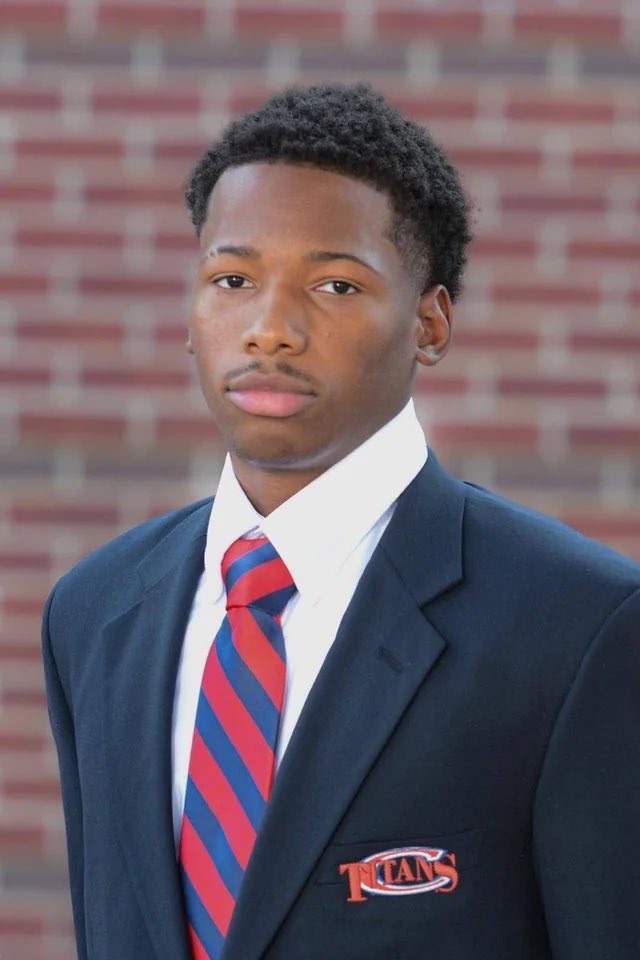
Frisco, TX – On the morning of April 2, 2025, the city of Frisco was rocked by a fatal incident during what should have been a routine high school track meet at Kuykendall Stadium. Seventeen-year-old Karmelo Anthony, a junior from Frisco Centennial High School, stabbed and killed another 17-year-old student, Austin Metcalf, from Memorial High School. The news traveled fast. So did the outrage, the headlines, and the assumptions.
Karmelo was arrested and charged with first-degree murder. But beneath the headlines lies a much more complicated — and sobering — truth. As more facts emerge, the incident increasingly appears to be a tragic case of self-defense, not a premeditated act of violence.
This case isn’t just about a fatal confrontation. It’s about how schools mishandle bullying, how media narratives often ignore the role of provocation, and how race, reputation, and perception shape public opinion before the facts ever settle.
The Incident: One Confrontation, Two Realities
The stabbing occurred during a UIL district track event, shortly after 10 a.m. Witnesses say Karmelo Anthony was sitting under the Memorial High School tent with friends — a relatively normal practice during multi-school meets. That’s when twin brothers Austin and Hunter Metcalf confronted him about his presence under “their” tent.
According to multiple eyewitnesses, the Metcalfs — known among students for aggressive behavior — attempted to forcibly remove Anthony, allegedly broke his phone, and initiated a physical altercation.
Accounts differ on whether the phone was indeed destroyed, but what’s consistent is that Austin laid hands on Karmelo first, escalating what could’ve been a verbal disagreement into something far more dangerous.
In fear for his safety, Karmelo reached into his backpack, pulled out a knife, and stabbed Austin once in the chest. He then fled the scene and was arrested nearby. Upon arrest, he cooperated fully and asked a simple question that would later define the case:
“Can this be considered self-defense?”
Given the facts, the answer should be yes.
Austin Metcalf: A Complex Legacy
Much of the early media coverage painted Austin Metcalf as a model student — a 4.0 GPA, MVP athlete, and “leader of men,” as his father Jeff Metcalf described him. But none of these accolades address the undeniable role Austin played in physically initiating the confrontation.
No academic honor roll can erase the fact that Metcalf physically grabbed, cornered, and allegedly attacked a peer over a seating dispute.
The deeper problem is this: when white teens are involved in violence, their academic records and sports stats often become the centerpiece of the narrative. But for Black teens like Karmelo, it’s their criminal charges — not their character — that lead.
Karmelo Anthony: Student, Worker, Young Defender
In contrast, Karmelo Anthony’s record has been buried under headlines that focus only on his arrest.
He’s a 3.7 GPA student.
He holds two jobs.
He’s received college offers.
He has no criminal history.
And he was being physically threatened by two larger students when he acted.
His father, Andrew Anthony, spoke with local media after his son’s bond was lowered from $1 million to $250,000. He described Karmelo as “respectful, well-mannered, and accountable.” His attorney, Mike Howard, echoed the sentiment:
“Every Texan has a right to defend themselves when they reasonably fear for their life.”
Texas law does not require a duty to retreat if a person feels imminent bodily harm — especially when outnumbered, cornered, and physically outmatched.
The Role of Race: Public Opinion, Double Standards, and Online Attacks
The tragedy has become a lightning rod for racially coded misinformation and online hate. On April 3, social justice commentator @MikeBaggz tweeted:
“Whenever white supremacists immediately flood our mentions before the full story is even out, you know something’s up.”
And he wasn’t wrong. While both families insist race wasn’t a factor, racist threats against Karmelo’s family escalated quickly, prompting them to raise over $500,000 on GiveSendGo to afford legal fees and relocate due to safety concerns.
Meanwhile, a fake post impersonating Frisco Police Chief David Shilson circulated online, falsely attributing racially inflammatory remarks to him. The department later debunked the post and warned the public about online misinformation.
The Legal Front: A Murder Charge That Defies Common Sense
Despite the overwhelming context of self-defense, Karmelo faces a first-degree murder charge. According to the Supreme Court’s 2005 Roper v. Simmons ruling, he is not eligible for the death penalty due to his age. However, he still faces decades in prison if convicted.
Over 75 people have been interviewed by police, yet the charge remains. The key question: Why is a teenager who was attacked, fled, and cooperated still being treated like a cold-blooded killer?
The Metcalf family’s GoFundMe has raised over $316,000 — a show of mourning and community support. But missing from their public statements is any acknowledgment of Austin’s role as an instigator.
A Pattern of Bullying Ignored by Schools
This incident isn’t just about race or justice — it’s also about school environments that fail to address aggressive behavior before it escalates.
Had this been any other high school fight — without knives, without fatalities — would the Metcalf twins have been disciplined for intimidation?
Karmelo didn’t bring a weapon to attack. He brought it because he knew bullying wasn’t taken seriously. And tragically, he was right.
This wasn’t a calculated act. It was a reaction from a teenager who, in that moment, was alone, surrounded, and scared.
Final Thoughts: Justice, Nuance, and the Need for Reform
What happened at Kuykendall Stadium on April 2 wasn’t just a tragic fight — it was a failure of the systems meant to protect students from aggression and escalation.
Karmelo Anthony is not a murderer. He is a young man who acted out of fear. And his story deserves a full, unfiltered examination — not trial-by-media, not selective sympathy.
As this case moves forward, the justice system must do what public perception has failed to do:
Examine the evidence without bias. Understand the context. Acknowledge the provocation. And above all — seek truth, not scapegoats.
Resources for Youth Justice
If you or someone you know has experienced bullying or youth violence, support is available:
- StopBullying.gov: Tools for families, educators, and students
- National Youth Violence Prevention Resource Center: youthviolence.eds.gov
- RAINN (for trauma recovery): 1-800-656-HOPE (4673)
📢 BLKsignal News stands with communities demanding fair justice, honest storytelling, and systems that protect — not criminalize — our youth.
Discover more from BLKsignal News
Subscribe to get the latest posts sent to your email.