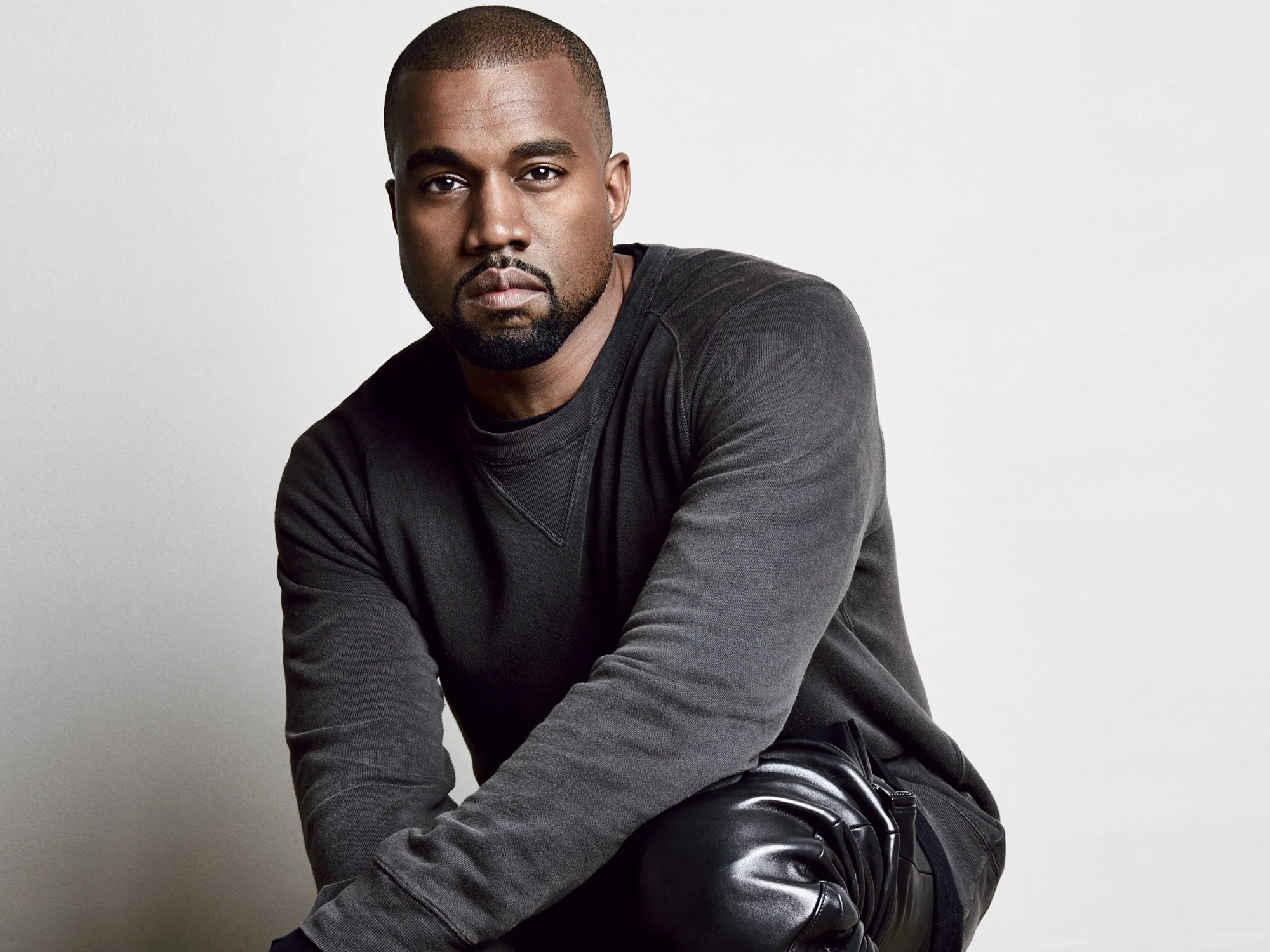
Kanye West, known for shattering conventions, has once again turned a spotlight onto one of the most deeply buried subjects in American discourse — childhood sexual trauma, particularly among boys and men. But this time, the conversation isn’t about music, fashion, or celebrity politics. It’s about something much heavier: the unspoken consequences of early exposure to adult experiences — and what society does when those truths are finally spoken out loud.
The Post That Shook the Internet — and America’s Comfort Zone
On April 30, Ye shared a deeply personal message via Instagram ahead of his song “Cousins,” revealing that as a child he was exposed to explicit adult material and subsequently found himself in inappropriate encounters with a cousin — moments he now recognizes as formative to his mental health struggles and emotional wiring.
The confession, raw and disturbing, wasn’t packaged for applause. It wasn’t marketed for shock value. It was, above all, an unguarded act of personal disclosure.
But the public’s response was revealing: memes, mockery, silence, or even worse — disbelief. It was a moment when America could have paused and listened, but instead, it recoiled.
Original Analysis: A Truth Too Taboo for a Culture Addicted to Polished Trauma
Ye’s admission wasn’t easy to hear — and that’s precisely the point. America is only comfortable with trauma when it’s scripted, sanitized, and shared on terms that don’t challenge cultural norms.
This wasn’t the type of confession we’re used to: it wasn’t made during a press tour, it wasn’t neatly tied up with a redemption arc, and it didn’t happen in a therapist’s office on national television.
It was messy, unscripted, and brutally honest — and because of that, it was powerful.
“We don’t know how to respond to Black male vulnerability unless it’s polished, poetic, or posthumous,” says Dr. Laila Martin, a trauma psychologist and Black mental health advocate. “Kanye’s confession disrupted that.”
Rather than engage with the actual message — that childhood sexual trauma often exists in confusing, hidden, and intra-familial forms — much of the media rushed to dissect the messenger.
But what Ye described is tragically common. Many survivors of early abuse, especially boys, live in silence due to shame, denial, or societal disbelief. And when abuse occurs between children — as it sometimes does in environments shaped by adult neglect or inappropriate exposure — it becomes even harder to understand, name, or heal from.
Generational Silence and the Stigma of Male Victimhood
What Ye articulated isn’t just a personal wound. It’s a societal indictment.
In countless Black families — and beyond — conversations about sexual boundaries, consent, and early exposure are still taboo. Boys, especially, are often denied the language or space to process these experiences. When they do speak out, their pain is dismissed as “just curiosity” or worse, their masculinity is questioned.
This silence is compounded by the normalization of early sexualization — from music videos to social media — that blurs boundaries before children fully understand them.
“Kanye’s story forces us to reckon with how many young boys are carrying trauma that society refuses to acknowledge because it doesn’t fit our narrative of what abuse ‘looks like,’” says Martin.
A Moment of Solidarity: When Hip-Hop Stands Still
In a genre that often trades in bravado and emotional armor, Ye’s disclosure was met with a rare moment of public support from his peers.
A$AP Ferg, in a statement shared on X, wrote:
“We don’t abandon our own when the story gets hard to hear. Real ones stand by Ye.”
That solidarity matters. In a culture where Black male vulnerability is often punished, seeing another artist respond with compassion instead of distance opens a door for others to speak their truths.
Kanye’s wife, Bianca Censori, is also reportedly offering steadfast support, standing beside him not as a publicist or damage controller — but as a partner who understands that trauma unspoken is trauma unresolved.
Cultural Context: A Double Standard in Mental Health Conversations
Ye’s confession is also a mirror to how America treats mental health selectively. We applaud vulnerability when it’s palatable — when it’s delivered via TED Talks or op-eds. But when it arrives unfiltered, raw, or from someone we’ve already labeled “difficult” or “unstable,” we dismiss it.
This is particularly true for Black men. Kanye has long lived under the lens of public scrutiny — his bipolar disorder, his outbursts, and his controversies often overshadow the fact that he’s a human being navigating public life with deeply private pain.
If we claim to care about trauma-informed culture, we cannot cherry-pick who is “allowed” to process their pain.
Why This Moment Is Bigger Than Kanye
Ye didn’t just make a song. He cracked open a conversation we’ve long kept sealed.
- How do we protect children from early sexual exposure in a hypersexualized media landscape?
- How do we talk about abuse that happens within families — especially when it doesn’t fit neat definitions?
- What does it mean when survivors are men, especially Black men, who are rarely believed or encouraged to speak out?
The answers aren’t simple. But the silence has cost too much for too long.
“Whether you agree with his delivery or not, Kanye’s story is giving language to wounds that many have carried for decades,” said @MikeBaggz, a socio-political commentator. “And that’s not something to mock — it’s something to reflect on.”
Final Thoughts: The Courage to Speak Isn’t Always Pretty
Kanye West is not a perfect messenger — but he’s an undeniably necessary one.
His “Cousins” confession is not about condoning confusion, chaos, or controversy. It’s about witnessing what happens when someone finally tries to put words to a childhood wound they were never given permission to name.
This moment is uncomfortable. But healing rarely starts in comfort. Sometimes it starts with an Instagram post, a haunting song, and the courage to say, “This happened to me.”
📢 If You or Someone You Know Needs Support
Survivors of sexual abuse — at any age — deserve to be heard, believed, and helped. Support is available through the National Sexual Assault Hotline at 1-800-656-HOPE (4673) or RAINN.org.
You are not alone. And your story matters.
📰 BLKsignal News tells the hard stories others won’t — because the truth demands it.
Follow us for more critical conversations at the intersections of culture, trauma, and healing.
Discover more from BLKsignal News
Subscribe to get the latest posts sent to your email.