Global Economy + Policy Analysis | May 7, 2025
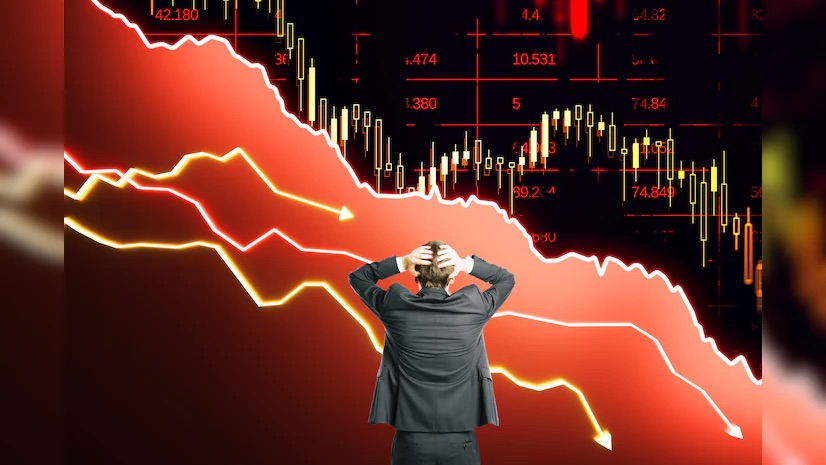
Wall Street isn’t just reacting to another dip — it’s convulsing in real time. Following a week of escalating trade tensions, unstable central bank signals, and a fractured global economy, market anxiety has transformed from a headline into a historic shift. And what we’re seeing now may not be a temporary correction, but the early tremors of a long-term economic realignment.
This morning, U.S. stock futures plummeted once again, continuing a streak of volatility that wiped out gains across the Dow Jones Industrial Average (-2.7%), Nasdaq, and the S&P 500 last week. Premarket activity reflects the same downward pressure: Dow futures are down 1.1%, Nasdaq down 1.6%, and the S&P slipping another 1.3%. The mood across global financial markets has shifted from unease to outright fear.
But beyond the numbers is a deeper story: the global economy is being restructured, and the rules investors once lived by are being rewritten.
Trade Wars Reloaded: Protectionism Is No Longer a Policy Fluke — It’s a Strategy
At the center of the current turmoil is the resurfacing of trade conflict as a core geopolitical weapon. The Biden administration’s decision to impose targeted tariffs on Chinese AI and semiconductor firms was a calculated effort to reassert American dominance in the tech arms race. But as expected, China struck back hard, levying new tariffs on rare earth exports — the very materials powering EV batteries, mobile phones, and defense systems.
The impact isn’t just economic — it’s existential.
“What we’re witnessing is the quiet death of globalization,” said Dr. Hina Suleiman, professor of international trade at NYU. “For decades, markets were built on open flow of goods and ideas. That era is collapsing in real time.”
This “modern Cold War” in commerce, as many analysts now call it, mirrors an ideological split not seen since the mid-20th century: the West, led by the U.S., doubling down on technological sovereignty; and the East, particularly China and BRICS nations, constructing parallel systems of trade and currency.
The result? Markets don’t just fear inflation or interest rates anymore — they fear structural isolation.
Where the Money’s Moving: Safe Havens Rise, Oil and Equities Slide
As equity markets falter, investors are making a decisive shift toward safe haven assets.
- Bitcoin surged past $87,000, its highest mark since 2021, driven by institutional investors seeking refuge from fiat currency volatility.
- Gold broke through $3,400 per ounce, a clear sign that inflation fears and global distrust in fiat-backed central banking are intensifying.
- Bond yields have declined, as capital floods into low-risk, long-term debt securities.
Meanwhile, crude oil prices fell 2%, a reflection of fears that a deceleration in global trade could shrink demand for energy. The oil market is also being disrupted by tensions in the Red Sea shipping lanes, where ongoing military conflict and piracy have bottlenecked supply chains in one of the world’s busiest trade corridors.
This divergence — with crypto and commodities spiking while traditional equities bleed — signals a broader collapse in investor confidence in legacy market institutions.
The Fed’s Tightrope Act: Stability or Stalemate?
The spotlight now turns to the Federal Reserve, whose balancing act has become more precarious than ever.
On one hand, inflation remains sticky, particularly in housing and consumer staples. On the other, recent economic indicators suggest a slowdown in job growth and industrial output — a signal that aggressive tightening could push the U.S. closer to recession.
“Markets want clarity. What they’re getting is paralysis,” said Alicia Grayson, senior market strategist at Brightridge Capital. “The Fed is boxed in — hike, and you risk recession; hold, and you risk runaway inflation. Either way, the uncertainty compounds.”
Fed Chair Jerome Powell’s speech later this week at the Economic Policy Symposium in Chicago is expected to outline the Q2 monetary strategy. But expectations are mixed. Many investors were hoping for a roadmap to rate cuts, but with consumer prices still elevated and volatility rising, the Fed may opt to wait and observe—a move markets could interpret as indecision at the worst time.
Investor Sentiment: When Confidence Breaks, So Does the Market
Investor sentiment has undergone a rapid and seismic shift.
The CBOE Volatility Index (VIX) — Wall Street’s most-watched “fear gauge” — spiked to 26.3, its highest level in nearly two years. Hedge funds and large institutions have begun pulling liquidity from riskier equities and reallocating into hard assets, government bonds, and cryptocurrencies.
Even retail investors are rebalancing portfolios in response to the market’s growing instability. Brokerage activity shows increased buying in inverse ETFs, gold funds, and short positions on tech and consumer cyclical stocks.
“Uncertainty is the only certainty right now,” Grayson said. “Between tariff retaliation, shifting currency power, and monetary policy confusion — markets have no clear forward momentum.”
Original Analysis: This Isn’t Just a Market Correction — It’s a Moral Reckoning
Here’s where a deeper lens is needed.
What we’re witnessing isn’t just economic. It’s philosophical. For decades, Western financial systems thrived on unregulated capitalism, labor outsourcing, and corporate arbitrage. These systems delivered record profits to shareholders while widening inequality gaps and creating fragile supply dependencies.
Today’s chaos reflects those chickens coming home to roost.
- Tech overdependence on foreign supply chains is now a national security issue.
- Financial policy driven by quarterly profits has made long-term resilience harder to build.
- Globalization without equity has failed both workers and markets.
What this moment demands is not just economic adjustment, but structural reform: in trade, in monetary policy, and in global governance. Investors, policymakers, and citizens must confront the hard truth: a profit-first economy will always be vulnerable to a people-last collapse.
What Comes Next: Realignment or Recession?
Analysts remain divided.
Some predict this is a temporary volatility window that will stabilize after Q2 earnings are reported and central banks clarify their next moves. Others believe this is the beginning of a broader recessionary wave, potentially triggered by geopolitical escalation, currency realignment (such as BRICS gold-backed reserves), and digital asset volatility.
Either way, investors are being advised to:
- Diversify portfolios across asset classes
- Reassess risk tolerance given rising volatility
- Avoid reactive decisions based on short-term headlines
“This isn’t about fear—it’s about foresight,” said Grayson. “Smart investors understand that this is a reset, not a collapse. And in every reset, there’s opportunity for those who are prepared.”
Conclusion: A New Market Era Is Emerging — Are We Ready?
This latest round of market turmoil is more than a cyclical downturn — it’s the sign of a global economic order in transition. From tech tariffs to crypto surges, from fractured alliances to central bank paralysis, the world is moving into an era defined not by certainty, but by complexity.
The question now isn’t if we’ll return to normal, but whether the old normal was ever sustainable at all.
In the face of this shift, investors, citizens, and institutions alike must do more than react—they must rethink what economic resilience really looks like in a fractured, multipolar world.
📌 Stay Informed With BLKsignal:
- Subscribe to our weekly financial digest
- Follow @BLKsignalNews for real-time global market coverage
- Support independent analysis rooted in truth, equity, and foresight
Discover more from BLKsignal News
Subscribe to get the latest posts sent to your email.