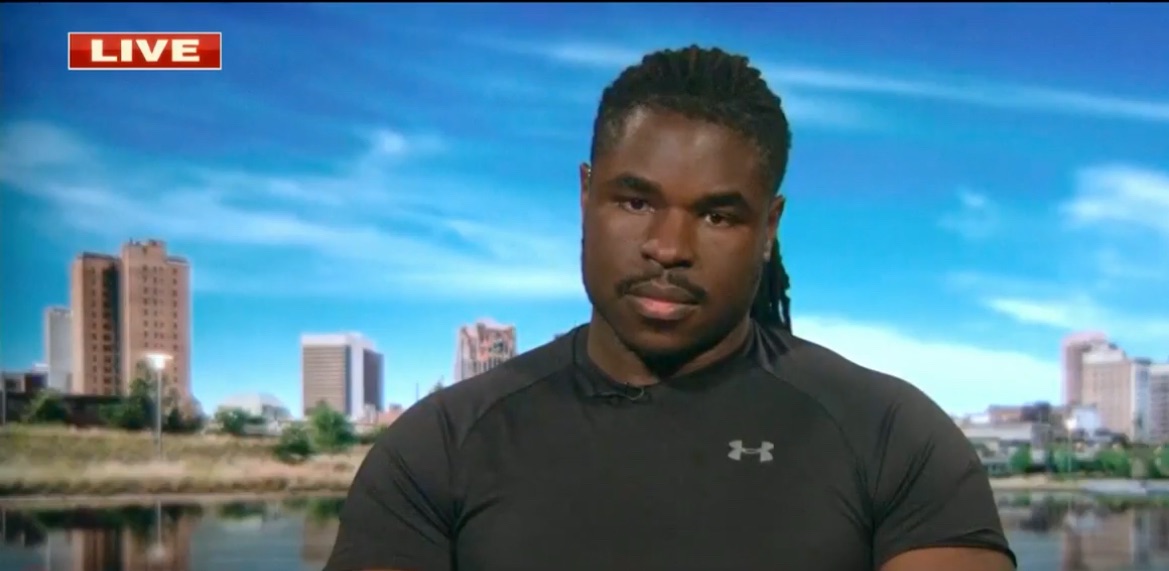
In a sport built on grit, sacrifice, and raw skill, one would assume that the best fighters naturally rise to the top. But according to Malcolm—known online as @Malcolm_fleX48, one of the sharpest voices dissecting combat sports today—that’s not the whole story.
In an exclusive sit-down with BLKsignal News, Malcolm laid bare what many fight fans have quietly suspected: that the UFC’s matchmaking machine isn’t just about merit—it’s about marketability, narrative, and numbers.
Is the UFC Still a Meritocracy?
We posed a simple but pressing question:
Is UFC matchmaking truly based on performance, or is it increasingly driven by politics, popularity, and profit?
Without hesitation, Malcolm peeled back the curtain.
“It’s not always the case,” Malcolm began. “When we look at big sports like the UFC—especially individual sports—we assume that the best guy gets the big fight, the title shot, the spotlight. But the reality is, that’s not always how it works.”
The Real Engine Behind the Matchmaking Machine
Malcolm didn’t mince words when describing the true forces at play:
“Actually, in the UFC, it’s very politics-driven. And not necessarily political in the traditional sense—but politics in the sense of what’s marketable, what sells, what’s hot at the time. That’s what really moves the needle.”
It’s a sobering breakdown for fans who still cling to the idea that wins alone earn opportunities. The uncomfortable truth is that fighting ability is just one piece of a much bigger puzzle.
Style, Spectacle, and Social Media: The New Metrics of Success
Yes, style still matters. A highlight-reel striker will always capture the spotlight quicker than a defensive grappler. But according to Malcolm, it goes far beyond fighting style.
“Yeah, stylistically, if you’re a good striker and not a boring smush wrestler—somebody who just holds people against the fence—you’re more likely to get the fights and opportunities. But it’s not just about skill anymore. It’s about whether people like you, whether you have a following.”
This brings us to one of the most revealing points in the conversation: visibility now competes directly with victory.
“Sometimes it just comes down to: do you have a big following? Do people want to see you? That matters just as much—if not more—than how many top contenders you’ve beaten.”
The Sean O’Malley Effect
To prove the point, Malcolm called out one of the most polarizing examples in recent memory:
“I mean, look at Sean O’Malley. The guy got a title shot out of nowhere, again.”
Known for his rainbow-colored hair, online persona, and knockout potential, O’Malley didn’t follow the traditional route to a title shot—yet he landed one regardless. His brand, not just his skills, did the heavy lifting.
And while no one is denying O’Malley’s talent, his trajectory proves that marketability can often leapfrog meritocracy.
The Business of Fighting: A Reality Check
Malcolm’s insight leads us to an uncomfortable realization: in today’s UFC, business often takes priority over blood and belts.
For hardcore fight purists, it’s a bitter pill. But for rising fighters, it’s a necessary truth.
“Talent still matters,” Malcolm clarified, “but it’s not the only thing that does. If you’re not marketable, your road is going to be longer, harder, and filled with more politics than people realize.”
Original Analysis: The Influence Economy Inside the Octagon
What we’re seeing is bigger than just one sport. It’s part of a broader cultural shift in which influence, brand identity, and digital charisma are increasingly tied to opportunity—especially for individual athletes.
The UFC is now just as much a media enterprise as it is a sports organization. Fighters must learn not only to win, but to trend. Not just to perform—but to promote. The athlete is now the algorithm.
That shift has particular consequences for fighters from underrepresented backgrounds, many of whom may not have access to the same marketing machinery or platform-building tools. For them, the meritocracy myth isn’t just frustrating—it’s a structural disadvantage.
Final Thoughts: The Octagon Is Changing—Are You Watching?
This interview isn’t just a behind-the-scenes look at UFC operations—it’s a wake-up call for fighters, fans, and even the media that covers them. In the new combat sports landscape, being the best fighter in the gym doesn’t guarantee you’ll be the next big name on the marquee.
Success now lives at the intersection of marketing, matchmaking, and media clout.
As Malcolm made clear: the fight doesn’t just happen in the cage. It happens online, in boardrooms, and on camera—long before the first punch is thrown.
🔗 Follow Malcolm:
BLKsignal News is your source for uncompromising commentary, culture, and coverage at the intersection of race, representation, and truth in media.
Support independent Black-owned journalism. Share this story.
Discover more from BLKsignal News
Subscribe to get the latest posts sent to your email.