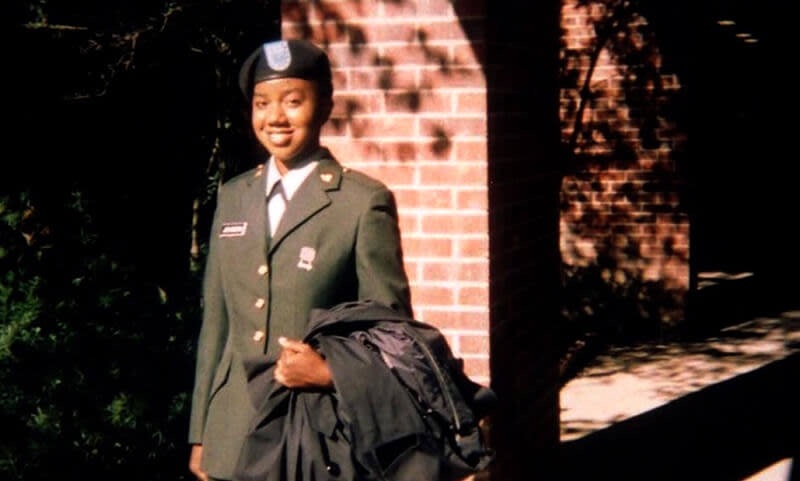
In July 2005, Private First Class LaVena Lynn Johnson, a 19-year-old honor student and soldier, was found dead inside a military tent in Balad, Iraq. The U.S. Army quickly ruled her death a suicide. According to the official narrative, she had shot herself in the mouth with her service-issued M-16 rifle.
But nearly two decades later, that explanation continues to collapse under the weight of physical evidence, common sense, and the voices of independent experts, journalists, and a grieving family who refuse to let her story be forgotten.
This isn’t just a mystery—it’s a national disgrace. One that exposes the deeply embedded systems of military secrecy, gender-based violence, and anti-Black racism.
The Death That Defies Logic: What the Army Tried to Hide
From the outset, the Army’s account failed to pass even basic scrutiny.
- LaVena’s M-16 was far too long for her to reasonably aim into her own mouth without significant effort or contortion.
- Her autopsy revealed a broken nose, a black eye, chemical burns to her genitals, and a gunshot wound inconsistent with suicide.
- Her body had bruises and abrasions, suggesting she had been in a struggle.
- There was evidence of sexual assault, including traces of semen and injuries consistent with rape.
Yet despite all this, the Department of Defense has never reopened the case.
Her father, Dr. John Johnson, himself a military veteran and meticulous researcher, reviewed the autopsy and discovered signs of staging. Her body had likely been moved. The blood spatter didn’t match the alleged suicide location. No gunpowder residue was found on her face or hands.
“None of it made sense. None of it added up. I knew my daughter didn’t do this to herself,” Dr. Johnson said in a past interview.
To this day, the U.S. military has refused to acknowledge any foul play. Despite multiple appeals, freedom of information requests, and national media coverage, the case remains officially closed.
A Pattern of Silence: Gendered Violence in the Ranks
LaVena Johnson is far from the only woman in uniform whose death or disappearance has been mishandled or dismissed by military investigators.
The cases of Vanessa Guillén, Nicole Burnham, and Keisha Morgan reveal a haunting pattern: sexual violence, institutional indifference, and families forced to fight for answers from a system designed to stonewall them.
In the military, survivors of sexual assault are often forced to report abuse to their own commanding officers—some of whom are the abusers themselves. This internal chain of command too often protects the institution, not the victim.
LaVena’s story fits this pattern. It is not an anomaly. It is a symptom of a culture that dehumanizes women in uniform, particularly Black women.
The Weight of Race: A Black Soldier in a Whitewashed System
The military’s dismissal of LaVena’s case cannot be separated from the legacy of anti-Black racism in the armed forces.
Since World War I, Black soldiers have faced discrimination, racial violence, and often fatal consequences for challenging white supremacy within the ranks. From segregated units to disproportionate disciplinary actions, the military has long treated Black service members as expendable.
Historian Dr. Peter Levy once wrote, “Black soldiers were often seen as expendable, facing not only the enemy abroad but also the hatred of their fellow soldiers.”
LaVena wasn’t just a woman. She was a Black woman in uniform—a demographic that faces dual vulnerabilities: racial bias and gendered violence.
And when she was found dead under suspicious circumstances, the system responded exactly as it was designed to: with silence, denial, and the suppression of truth.
Evidence of a Cover-Up: What Was the Government Protecting?
What’s most chilling is not just what happened to LaVena—but what happened afterward.
- Her family was denied access to her full autopsy report.
- Photographs were redacted or withheld.
- The Department of Defense denied multiple requests to reclassify the case or open an independent investigation.
- No suspect was ever named.
- Key forensic evidence—including fingerprints, toxicology reports, and clothing samples—was either mishandled or never analyzed.
If this were a civilian case, with this much forensic conflict and physical trauma, it would spark a murder investigation. Instead, LaVena’s death was brushed away as a psychological breakdown—a narrative that shamed the victim and shielded potential perpetrators.
Why?
Because the truth would implicate the military. Because holding someone accountable would mean admitting that a U.S. Army base in Iraq became a crime scene—and someone in uniform got away with murder.
The Fight for Justice: A Family’s Relentless Pursuit
Dr. John Johnson has carried this burden for nearly 20 years. He has testified before Congress, conducted his own forensic reviews, and called on national media and activists to take up his daughter’s case.
Thanks to his efforts, LaVena’s story has not disappeared. But justice has remained out of reach.
“It should not be on families to investigate the deaths of their children,” he once said. “The system is supposed to protect them—not destroy them.”
Why the Silence Persists: Institutional Self-Preservation
What LaVena’s case reveals is chilling: when the truth becomes inconvenient, the government buries it.
- To admit LaVena was murdered would expose negligence and abuse.
- It would call into question the Pentagon’s policies on sexual violence.
- It would validate every claim about systemic racism and misogyny in the military.
So instead, they silence, they redact, and they delay—hoping families will grow tired, and the public will forget.
But we won’t forget.
A Call to Action: LaVena Johnson Deserves Justice
LaVena Johnson was more than a statistic. She was a scholar, a daughter, a dreamer—and a soldier who believed in the country that ultimately betrayed her.
The question now is: how long will we let this injustice go unanswered?
We demand:
- An independent, non-military investigation into LaVena Johnson’s death
- Congressional hearings on the handling of sexual assault and suspicious deaths in the military
- A federal-level review of cases where suicide was claimed despite conflicting forensic evidence
Conclusion: Truth Delayed Is Justice Denied
The murder of LaVena Johnson is more than a tragedy. It is a systemic failure. A cover-up. A national shame that reveals how far institutions will go to protect themselves at the expense of the very people sworn to serve them.
But her story is not over. Because the truth doesn’t fade—it resists, it echoes, and it waits for us to listen.
Now is the time.
Say her name. Demand justice. Keep the pressure.
🕊️ Learn more and support the fight for justice:
📣 #JusticeForLaVena
🔗 Watch video coverage and interviews
🔗 Support military sexual assault reform initiatives
📰 BLKsignal News is committed to amplifying the stories others silence. Follow us for investigative journalism rooted in truth and accountability.
Discover more from BLKsignal News
Subscribe to get the latest posts sent to your email.