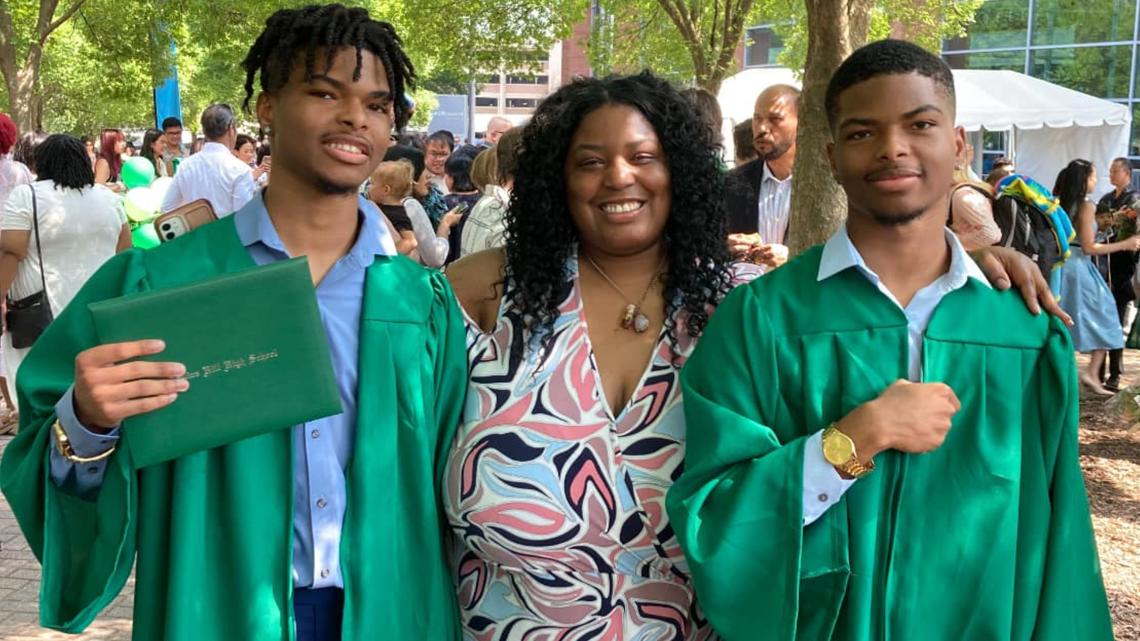
What happened to Qaadir and Naazir Lewis?
That question continues to echo throughout Georgia—and increasingly, across the country—as the mysterious deaths of the 19-year-old twin brothers remain unsolved. Nearly two months after their bodies were found on the summit of Bell Mountain, the public is left with only fragments: surveillance footage, a missed flight, an abandoned Uber, and a remote mountaintop that the boys had no known connection to.
The Georgia Bureau of Investigation (GBI) has released limited information. And while the family pleads for clarity, the official narrative has only deepened public confusion.
But this isn’t just a local tragedy. It’s a national reflection of something larger: how Black lives—especially those caught in unsolved circumstances—are too often left with incomplete justice, unanswered questions, and a system ill-equipped to bring full truth to light.
A Calm Night, a Quiet Video, and a Deadly Destination
On the night of March 7, 2025, Qaadir and Naazir were caught on camera around 10:30 p.m. at a gas station near their home in Lawrenceville, Georgia. The video shows them purchasing snacks, chatting casually—no signs of distress or urgency.
It’s an ordinary moment.
But by 11:00 a.m. the next morning, their bodies were discovered at the summit of Bell Mountain, nearly two hours north in Hiawassee, Georgia. Both had suffered gunshot wounds.
There is no surveillance showing their journey there. No public record of a car rental. No known connections to the remote area. No clear explanation of how they bypassed the locked trailhead, which is normally gated overnight until 8 a.m.
How did two suburban teens, unfamiliar with mountain terrain, end up lifeless atop a rural summit—with no witnesses, no known transportation, and no weapon recovered?
A Timeline That Disappears After 10:30 PM
Earlier that same day, the twins were scheduled to fly to Boston to visit friends. But their Uber arrived late, and they missed the flight. What they did between their return home and the gas station stop is unknown.
Beyond that point, the timeline goes dark.
This black hole of information is what haunts their family the most. Where did they go? Who were they with? Why Bell Mountain?
Their aunt, Samira Brawner, told reporters:
“They were just excited about their trip. Nothing about their behavior said goodbye. They were planning a future.”
A Controversial Theory—and a Family’s Refusal
Initial whispers from law enforcement suggested a murder-suicide scenario—implying one brother killed the other and then himself. But the family vehemently rejects this theory, citing their deep emotional bond, lack of any mental health history, and the absurdity of such an act occurring on unfamiliar terrain.
“They would never harm each other,” Brawner said. “They were twins. Best friends. They did everything together.”
So far, the GBI has not released an autopsy, toxicology, or confirmed a cause of death beyond the gunshot wounds. No firearm has been located. No third-party suspects have been named.
Yet despite the lack of concrete evidence supporting a murder-suicide, the silence around other possibilities leaves the family—and the public—feeling uncomfortably suspended.
A Broader Pattern: When Black Deaths Go Unanswered
The case of Qaadir and Naazir Lewis isn’t just tragic. It fits into a larger, deeply unsettling pattern in America: unexplained deaths of Black individuals too often fade without full investigation, media attention, or justice.
Whether it’s missing Black women, unresolved cases involving Black youth, or incidents ruled as suicide under suspicious circumstances, families are left doing the work of detectives—digging through timelines, hiring private investigators, launching GoFundMe campaigns, and begging the public to care.
What makes this case stand out is not just its mystery—but how quickly it’s been treated as a closed chapter, despite glaring gaps in logic and evidence.
Original Analysis: This Isn’t Just About One Case—It’s About Systemic Disregard
If Qaadir and Naazir were two white brothers from a wealthier suburb, would this investigation look the same?
Would their journey to a remote mountaintop with no transportation and no ties be met with vague conclusions? Would their family’s concerns be sidelined with speculative theories? Would we still be waiting for basic details like autopsy findings?
Black families should not have to campaign for thorough investigations.
Yet time and again, they do.
In this case, we’re not just missing facts. We’re missing urgency. And that absence speaks volumes.
Questions That Still Need Answers
Despite the weeks that have passed, the following questions remain unresolved:
- How did they travel nearly 100 miles to Bell Mountain without a known vehicle?
- Who (if anyone) accompanied them?
- How did they gain access to a location that is reportedly locked overnight?
- Where is the weapon allegedly used in their deaths?
- Why haven’t autopsy or toxicology reports been released to the public?
Every day that passes without answers adds to the grief—and suspicion.
A Family’s Grief, a Community’s Outcry
The Lewis family continues to mourn in public while pushing for truth behind closed doors. A GoFundMe campaign has helped raise support, but what they need more than donations is transparency.
Across social media, users have amplified the twins’ story under hashtags like #JusticeForTheLewisTwins, demanding independent investigation and wider press coverage.
This is not just a personal tragedy. It is a public concern.
Because if this case fades into silence, it sends a message to other families: Black grief does not matter unless it’s sensationalized.
Final Word: Don’t Let This Become Another Unfinished Chapter
Qaadir and Naazir Lewis deserve more than a mystery. They deserve truth.
Whether foul play was involved, whether someone else knows more, or whether system failures created this outcome—we must not accept silence as closure.
As we wait for official answers, we must keep asking questions. We must amplify the story. We must refuse to normalize unanswered death when Black lives are involved.
This family deserves peace. And peace starts with truth.
What You Can Do
- Contact the Georgia Bureau of Investigation and urge transparency.
- Share their story on social platforms using #JusticeForTheLewisTwins.
- Support the family’s fundraiser if able.
- Hold media accountable—demand consistent coverage beyond trending moments.
Discover more from BLKsignal News
Subscribe to get the latest posts sent to your email.