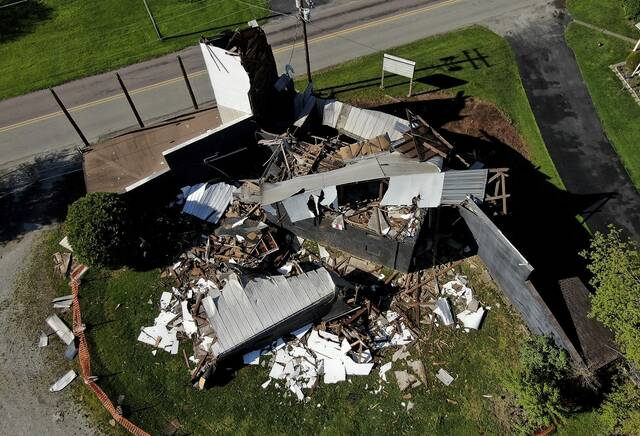
Western Pennsylvania is reeling from a violent wave of storms that has now claimed the lives of three residents—including 67-year-old Raymond Gordon of Ross Township, who was struck and killed by a falling tree just outside his home.
The sudden and tragic death of Gordon—described by neighbors as a quiet man who took pride in his home and yard—underscores a grim reality: as storms grow more frequent and unpredictable, the everyday act of stepping outside can become life-threatening.
According to Ross Township Police, Gordon had been doing routine outdoor maintenance between storm bursts when wind gusts exceeding 60 mph caused a large tree to collapse. The saturated soil, loosened by relentless rainfall, made conditions ripe for disaster. Emergency responders pronounced him dead at the scene.
“There is no indication of foul play,” said a police spokesperson. “This was a heartbreaking accident caused by extreme weather.”
Three Lives Lost, One Region on Edge
Gordon’s death is the third confirmed fatality tied to the line of storms that tore through Western Pennsylvania on Tuesday.
- In Pittsburgh’s South Side Slopes, a man was electrocuted after stepping on a live downed wire while trying to clear debris.
- In Greene County, another man was killed when a tree crushed the passenger side of a moving vehicle. The driver survived but remains hospitalized.
These deaths occurred in separate counties—but all within the same 12-hour window—highlighting just how widespread and volatile this weather system was.
And while cleanup crews continue working around the clock, many residents say the psychological storm is just beginning.
The Hidden Toll of “Natural Accidents”
To call these deaths “accidents” is technically accurate. But as meteorologists and environmental scientists increasingly point out, the line between natural disaster and climate-amplified tragedy is becoming blurred.
What used to be “freak weather events” are now seasonal expectations.
Extreme rainfall saturates the ground more quickly. Temperature shifts destabilize tree root systems. High wind events arrive with shorter notice. In that context, Raymond Gordon’s death is not an anomaly—it’s part of a growing trend across the United States, where older infrastructure and changing ecosystems combine to heighten personal risk.
According to the National Weather Service, the storm that hit Western Pennsylvania brought:
- Wind gusts exceeding 60–70 mph
- Over 2 inches of rain in less than 6 hours
- Power outages impacting tens of thousands
- Dozens of fallen trees and blocked roadways
And that was just one day in May.
Local Infrastructure, National Crisis
Ross Township, like many older Pennsylvania communities, has streets lined with mature trees, legacy utility lines, and aging drainage systems. These features, once seen as neighborhood charm, are now points of vulnerability.
- Uprooted trees crash through roofs and crush cars.
- Overloaded sewers cause flash floods on otherwise quiet roads.
- Power lines—many still above ground—become electrified hazards after just a few minutes of wind and rain.
And while emergency crews did issue warnings and staged equipment in advance of the storm, the sheer speed and severity overwhelmed the region’s resources.
This isn’t just about weather. It’s about adaptation—or the lack of it.
A Community Mourns One of Its Own
For residents of Ross Township, the loss of Raymond Gordon is personal. Known for his well-kept yard, daily walks, and friendly nods, he represented the quiet fabric of a neighborhood where most people know each other by name or face.
“This storm didn’t just knock down trees,” one neighbor told BLKsignal. “It took lives. And it’s going to take a while before we feel safe again.”
That sense of unease is spreading. As utility companies work to restore power, residents are also being urged to:
- Avoid all downed power lines, even if they appear inactive
- Report blocked roads or unstable trees to local authorities
- Check on elderly or immobile neighbors, especially in areas without power
- Document storm damage for both safety and potential insurance claims
Original Analysis: This Is More Than a Storm—It’s a Wake-Up Call
Western Pennsylvania is not typically thought of as a hurricane zone or tornado alley. But in recent years, climate irregularities have made traditional geographic boundaries irrelevant.
Flash floods now hit mountain towns. Sudden wind shears strike urban blocks. What we’re seeing is a shift in both climate patterns and community risk, and local governments will need to catch up—fast.
That means investing in:
- Stronger tree removal and trimming programs
- Buried or reinforced utility infrastructure
- Emergency communication tools tailored to seniors and rural households
- Stormwater management upgrades to prevent future flooding fatalities
Gordon’s death may have been labeled an “accident,” but it shouldn’t have been an inevitability.
Final Thoughts: Lives Like Raymond Gordon’s Deserve More Than Sympathy
As the headlines move on, Raymond Gordon’s death risks being reduced to a statistic. But for his neighbors, he was more than that—and for the rest of us, he should serve as a sobering reminder of the risks now embedded in everyday life.
This isn’t about fear. It’s about preparation. About demanding systems that keep pace with new realities. About holding municipalities, power companies, and elected officials accountable—not after the storm, but before the next one hits.
Because behind every storm fatality is a family left shattered, a community left shaken, and a question we all must ask:
What are we doing now to prevent the next Raymond Gordon?
Discover more from BLKsignal News
Subscribe to get the latest posts sent to your email.