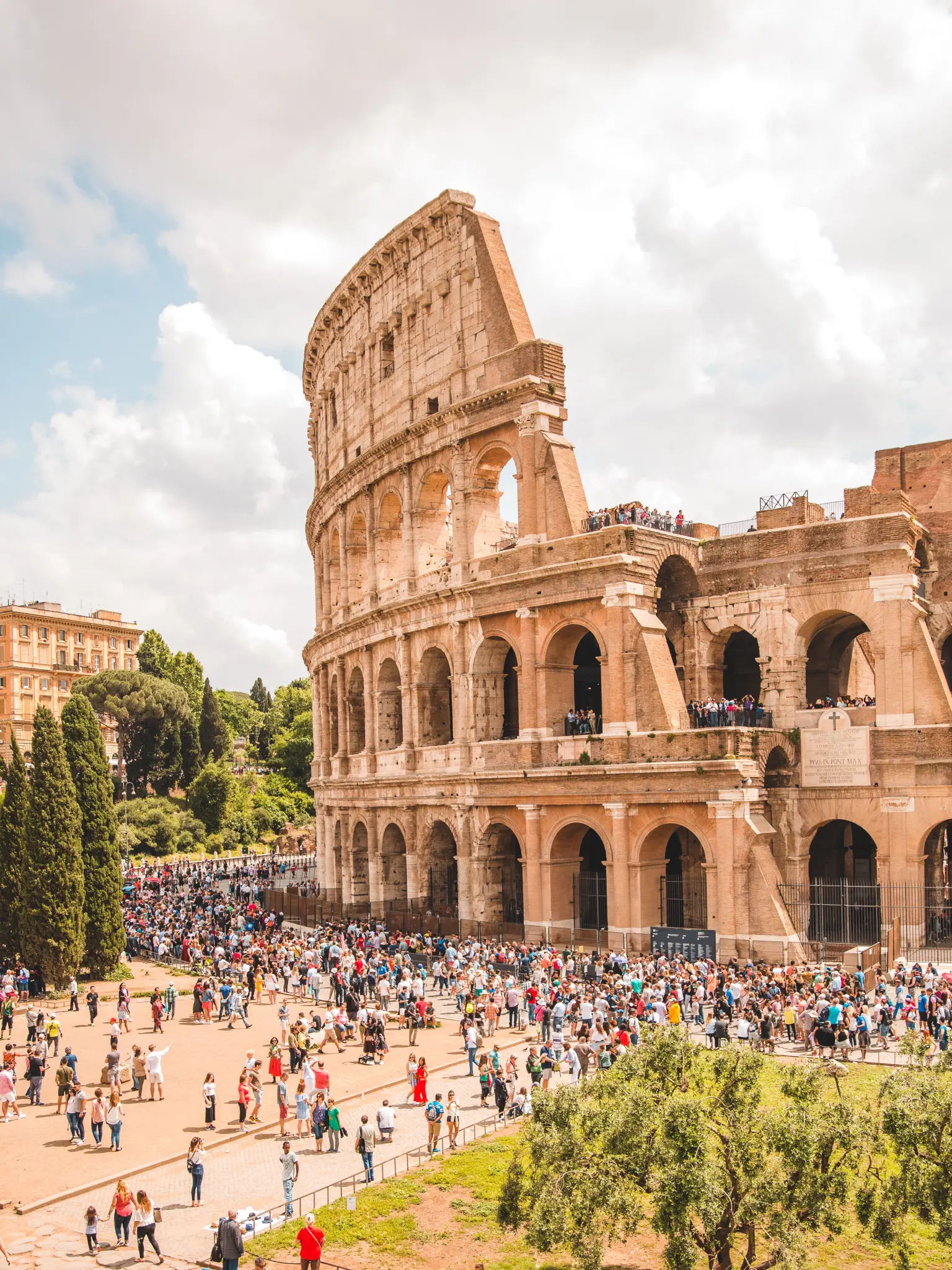
ROME — A sightseeing trip turned into a medical emergency last Friday when a 47-year-old American tourist attempted to scale a metal fence at the Colosseum in Rome and ended up impaled — reportedly while trying to snap a photo. The man, a U.S. citizen currently residing in Taiwan, suffered significant injuries and was rushed to San Giovanni Hospital in critical condition. Witnesses described the incident as both horrifying and baffling.
Italian authorities say the man was stuck on the fence for over 20 minutes before emergency crews could safely extract him. He reportedly passed out from the pain while still hanging on the iron barrier. He later underwent surgery and received over 80 stitches, according to Il Messaggero, one of Italy’s leading newspapers.
Tourists and Tragedy: A Growing Global Pattern
Though the man survived, the incident reignites global conversations about tourism ethics, digital vanity, and the consequences of ignoring basic safety for a social media photo. Authorities have not confirmed whether the motive was indeed selfie-related, but investigators suspect it was — given the pattern of similar accidents tied to extreme photo-taking.
This isn’t an isolated event. From people falling off cliffs for selfies to tourists damaging ancient ruins for content, modern travel has increasingly collided with reckless behavior.
“Rome isn’t a movie set. These ruins are not props,” one Italian official told local press. “Visitors must respect that these sites are centuries old, fragile, and not meant to be climbed or exploited for personal glory.”
Entitlement or Ignorance? A Modern Tourism Crisis
This episode exposes a deeper issue: the clash between global tourism and cultural preservation. Many critics are pointing to a growing wave of what some call “influencer entitlement” — where travelers treat iconic sites as personal playgrounds rather than places of historical reverence.
In 2021, two American tourists were fined after sneaking into the Colosseum at night to drink beer. In 2023, another visitor was caught carving his girlfriend’s name into one of the outer walls — a moment that sparked global backlash and a renewed push for stricter penalties.
This isn’t just about one person getting hurt. It’s about the failure to respect spaces that carry meaning far beyond the Instagram grid.
Social Media Reactions: Humor, Judgment, and Frustration
As news of the incident spread online, reactions ranged from sympathy to sarcasm.
“Bro tried to become a martyr for Instagram clout.” – @RomanHolidayFiasco
“He wanted a view. Now he’s got a room — in the hospital.” – @RuinsReckless
“Natural selection is working overtime this summer.” – @HistoryHasEyes
Others, however, pushed back against the mockery, pointing out the danger of piling on before all facts are known.
“This could’ve ended in death. Let’s have some decency,” one user commented under a viral post. “But yes, respect global landmarks. That part is valid.”
A Larger Conversation: Colonial Gaze and Tourist Privilege
What gets less attention in viral tourist scandals is the implicit hierarchy in who gets forgiven — and who doesn’t. While Black and Brown tourists are often scrutinized or policed heavily for minor actions abroad, white or Western tourists often receive media narratives framed as clumsy, accidental, or “silly.”
Let’s ask the harder questions: Would the headlines be this lighthearted if the injured tourist had been Arab, African, or Latino? Would the online tone be different if this had occurred in a predominantly non-European country?
Rome, like many world capitals, continues to deal with overtourism that stresses its infrastructure, drives up housing prices, and degrades historical landmarks. But rarely are these deeper tensions addressed — especially when the face of the problem looks familiar to the media.
A Teachable Moment: Travel With Purpose, Not Ego
Tourism is a beautiful way to connect cultures. But travel should come with responsibility. In a digital age where content creation often overshadows context and respect, incidents like this serve as cautionary tales.
The metal fences at the Colosseum aren’t decorative. They’re there to preserve one of the most significant ancient sites on Earth — a monument that has withstood wars, time, and collapse.
What it can’t withstand is disrespect disguised as adventure.
Final Thoughts
The American tourist survived — and that’s fortunate. But the real lesson here isn’t about injury or embarrassment. It’s about what we choose to value when we visit the sacred, the historic, and the foreign. It’s about knowing that not every experience needs to be captured on camera, and that reverence sometimes looks like restraint.
In the end, the most viral photos may not be worth the scars — literal or cultural.
Discover more from BLKsignal News
Subscribe to get the latest posts sent to your email.