“They drop bombs on us, then drop food and call it mercy.”
— A Gaza father speaking to a local aid worker.
In the Gaza Strip, the skies now carry a bitter irony. After months of aerial bombardments that have flattened neighborhoods and killed tens of thousands, those same skies are now releasing pallets of food. Israel, under mounting global pressure, has begun airdropping humanitarian aid into the very enclave it has blockaded, besieged, and decimated.
But for many in Gaza — and for critics across the world — this is not a pivot toward compassion. It is a calculated public relations maneuver, one that seeks to replace policy change with parachutes, and accountability with optics.
Let’s be clear: hunger is not falling from the sky. It is being manufactured on the ground.
Airdrops Amid An Avalanche of Death
On Saturday night, Israeli Air Force planes released seven pallets of food into Gaza. The military stated this was a step “to improve the humanitarian response” and to counter what it called “false claims” of intentional starvation. But the facts tell a different story.
Since March 2025, Israel has intensified its siege, halting nearly all food and medicine deliveries, shuttering Gaza’s only water desalination plant, and tightening restrictions on humanitarian convoys. According to Gaza’s Ministry of Health, 57 people have already died of starvation this year — 46 of those deaths occurring just this month. The majority were children.
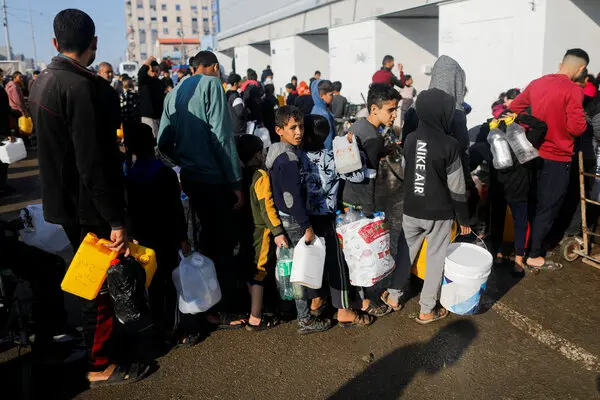
Nearly a third of Gaza’s population hasn’t eaten in days, says the United Nations World Food Program. Aid groups estimate that more than 60,000 metric tons of food are needed per month to meet basic survival needs — that’s around 120 trucks a day. In the past week, an average of just 85 trucks per day made it through.
One airdrop, no matter how televised, changes nothing fundamental.
More Spectacle Than Solution
To understand the deep skepticism surrounding these airdrops, it’s important to examine not just what’s happening, but why it’s happening now. This shift in tactics didn’t come from compassion. It came from criticism.
For weeks, the international community has been inundated with harrowing images of emaciated children, mass graves, and stampedes at food trucks. French President Emmanuel Macron, British Prime Minister Keir Starmer, and German Chancellor Friedrich Merz held emergency calls, while over two dozen countries condemned Israel’s handling of aid delivery.
Starmer’s words were direct: “News that Israel will allow countries to airdrop aid into Gaza has come far too late.”
But even these efforts face obstacles. Past airdrops from the U.S. and other nations have resulted in tragedy. Pallets have landed in the sea, food has spoiled on impact, and in one instance, five civilians were killed when a container crashed through a rooftop. Aid professionals warn that the chaos of airdrops often leads to stampedes, misdelivery, and even Israeli gunfire — a point that has been documented by eyewitnesses and human rights monitors alike.
Philippe Lazzarini, head of the U.N. Relief and Works Agency (UNRWA), called out the futility of the current approach:
“Airdrops will not reverse the deepening starvation… They are expensive, inefficient, and can even kill starving civilians. It is a distraction — a smoke screen. A manmade hunger can only be addressed by political will. Lift the siege.”
Starvation as Strategy: A Colonial Playbook
The idea that famine can be used as a military tactic is not new — especially not for colonized and occupied peoples. From British-imposed famines in Bengal and Ireland, to apartheid-era blockades in South Africa, food has long been used as a weapon of control, punishment, and erasure.
Israel’s strategy in Gaza echoes this history with painful clarity.
After the October 7, 2023, Hamas-led attacks that killed 1,200 Israelis and led to the capture of 250 hostages, Israel launched a military response that has since killed more than 59,700 Palestinians, according to Gaza health officials. Entire cities have been leveled, schools and hospitals bombed, and nearly the entire population displaced.
In the months that followed, right-wing Israeli politicians called for the dismantling of the U.N.’s aid system, accusing it of propping up Hamas — despite no credible evidence of systematic theft of humanitarian supplies, according to a recent U.S. government review. The result? A systematic chokehold on Gaza’s access to food, water, and medical care.
Now, the same government that sealed Gaza off from life-sustaining aid is dropping food by parachute and claiming the moral high ground.
The Gaza Humanitarian Foundation: Aid or Agenda?
In lieu of U.N. systems, Israel has promoted the Gaza Humanitarian Foundation (GHF) — a group created with input from former U.S. intelligence and defense officials. The GHF has reportedly distributed 90 million meals since May. But critics say its work has been unequal, disorganized, and dangerously militarized.
Meals are only available in southern Gaza. Crowds often surge to the few sites that exist, leading to stampedes and Israeli gunfire, according to multiple reports. More than 800 Palestinians have been killed while seeking food since March.
To many, GHF represents not a humanitarian breakthrough, but an attempt to sideline long-standing international aid frameworks in favor of military-aligned alternatives — systems that sidestep accountability, restrict oversight, and deepen dependency.
A Fork in the Road: Real Aid or Performative Rescue
It’s easy to celebrate parachutes from the sky. The images are cinematic. The intention seems benevolent. But the truth, as always, lies in the infrastructure.
Aid groups say that if Israel is truly shifting its stance, it must:
- Fully reopen land crossings, including those to central and northern Gaza.
- Restore operations at Gaza’s water plants, hospitals, and bakeries.
- Stop firing on civilians gathering at aid trucks.
- Lift restrictions on humanitarian organizations and local aid workers.
Without these changes, the airdrops are nothing more than a performance — a way to appease international outrage while avoiding deeper reforms.
And to those on the ground, starving in silence, symbolism does not fill a stomach.
BlkSignal Analysis: Solidarity Requires Truth, Not Optics
What’s unfolding in Gaza is not just a tragedy — it’s a policy choice. And around the world, those who understand the legacy of systemic hunger, forced displacement, and colonial violence must call it by its name.
To be in solidarity with Gaza is to look past the headlines and into the heart of the matter. Aid is essential, but so is agency. Charity cannot substitute for freedom. Survival cannot be separated from self-determination.
As long as starvation is used as leverage, and aid is filtered through a political lens, the people of Gaza will continue to suffer — not for lack of food, but for lack of justice.
It’s time the world stopped celebrating crumbs dropped from the sky and began demanding access, sovereignty, and dignity on the ground.
BlkSignal News will continue our coverage of Gaza and other crises through a people-centered, justice-first lens. Follow us on X, IG, and Threads @BlkSignalNews.
Discover more from BLKsignal News
Subscribe to get the latest posts sent to your email.