On July 24, 2025, Hulk Hogan died at the age of 71. But for many Black Americans, that date had already been etched in memory — not as the end of a wrestling career, but as a moment of racial reckoning. Exactly 10 years earlier, to the day, World Wrestling Entertainment (WWE) publicly cut ties with Hogan for his repeated and unapologetic use of racial slurs in a leaked recording.
His death may have shocked wrestling fans, but it also reignited a conversation that never really went away: when do we stop forgiving white men for anti-Black racism? And more importantly — why do we so often rush to do it in the first place?
A Legacy Larger Than Life — And Just as Deeply Flawed
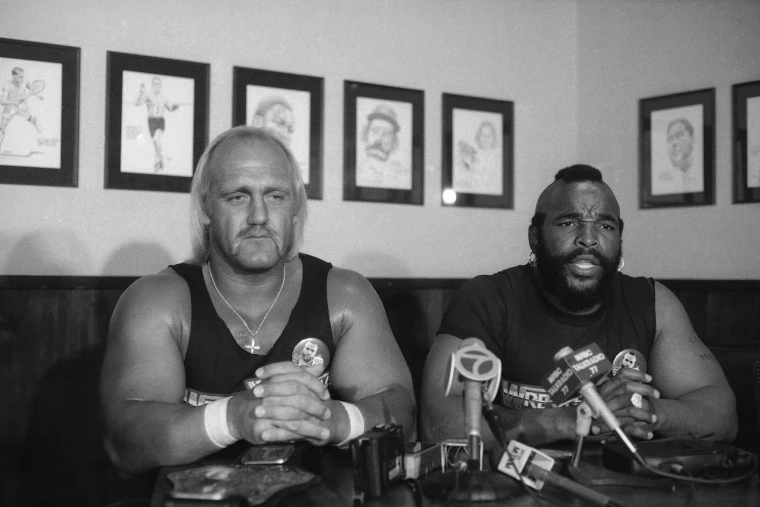
To some, Hulk Hogan was an icon — a cornerstone of American pop culture. With his blonde handlebar mustache, ripped t-shirts, and catchphrases like “Whatcha gonna do, brother?” he was a larger-than-life figure who helped define 1980s and 1990s wrestling. Hogan was one of WWE’s most visible stars during its rise into mainstream global entertainment.
But beneath the spandex and spectacle was a man whose off-camera words revealed a much darker side.
In 2015, transcripts from a 2006 sex tape surfaced in which Hogan was heard speaking about his daughter Brooke’s dating life, saying:
“I mean, I’d rather if she was going to fk some n**, I’d rather her marry an 8-foot-tall n***** worth a hundred million dollars… I guess we’re all a little racist. Fking n**s.”
He wasn’t just expressing a preference or an opinion — he was reinforcing a racist worldview rooted in white paternalism, economic control, and deep-rooted anti-Blackness. He literally said, “I am a racist, to a point.”
Let that sink in.
WWE’s Swift Response — and the Silence That Followed
When the transcript was made public, WWE didn’t hesitate. Hogan was fired on July 24, 2015. His name was removed from WWE’s Hall of Fame page. Merchandise was scrubbed. Appearances were canceled. He was effectively erased from the official WWE universe overnight.
At the time, the company issued a rare public statement:
“WWE terminated its contract with Terry Bollea (aka Hulk Hogan). WWE is committed to embracing and celebrating individuals from all backgrounds as demonstrated by the diversity of our employees, performers and fans worldwide.”
But that “commitment” turned out to be paper-thin. In 2018, after a few years of silence and soft rebranding, WWE quietly welcomed Hogan back into the fold. He returned to TV, was reinstated in the Hall of Fame, and even hosted events. Not because the community forgave him — but because the corporation calculated that enough time had passed for fans to forget.
He never did any serious public accountability work. There was no reconciliation. No grassroots outreach. Just an apology to People magazine and a few tears on morning television. For many in the Black community, it felt like Hogan wasn’t truly sorry — he was just sorry he got caught.
Even in Death, No One Is Above Accountability
When news of Hogan’s death broke, some outlets rushed to canonize him as a fallen American hero. Obituaries praised his athleticism, his charisma, and his “comeback.” But those same tributes often reduced the racism to a “controversy” — a mere footnote.
That kind of whitewashing is why we still need to talk about it.
Racism isn’t a blip. It’s not a bump in the road. For Black people, it’s a system that constricts life chances, ruins families, and in many cases, ends lives. When someone with Hogan’s platform uses their voice to spew anti-Black hate — even in a “private moment” — it matters. And when society prioritizes his “redemption arc” over the harm he caused, that matters too.
Let’s be clear: this isn’t about disrespecting the dead. It’s about holding the living — and the legacies they leave behind — accountable. History doesn’t stop when someone dies. In many ways, that’s when it begins in earnest.
Why This Still Matters in 2025
Hogan’s death may have closed a chapter, but the book is far from finished. His story is part of a larger pattern — one where white celebrities get second, third, and fourth chances while Black people are given none. Where apologies are enough to rehab a brand, but not enough to repair the trust of a community.
In a year when police violence, voter suppression, and cultural erasure are still very real issues for Black Americans, the death of Hulk Hogan on the exact date he was fired for racism isn’t just ironic — it’s symbolic. A decade later, the echoes of that tape still reverberate.
Ten years later, and we’re still asking the same questions:
- Why is anti-Blackness treated as a forgivable offense?
- Why are apologies rarely followed by action?
- And why do so many still rush to protect legacies before protecting the people harmed?
Final Bell
Hulk Hogan was a towering figure. But he was also a deeply flawed man who used his platform to belittle and demean an entire community. That truth doesn’t disappear because he’s no longer with us. If anything, it demands that we remember him fully — not just as a wrestling hero, but as a man whose racism was as real as his body slams.
And if that makes people uncomfortable, good. Because justice isn’t always comfortable. Neither is history.
Even in death, there’s no escape from truth.
Discover more from BLKsignal News
Subscribe to get the latest posts sent to your email.